2026-07-03
Candy Apple Cheeks After Jaw Botox? Why It Might Look More Bulging
Learn why compensatory hypertrophy, like bulging temples or upper masseters, occurs after square jaw Botox. Discover how muscle balance and proper injection techniques prevent these side effects.

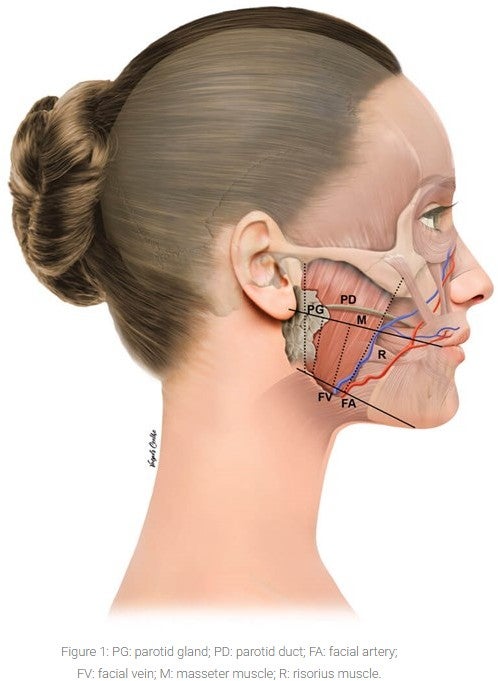
Reasons why ‘compensatory hypertrophy’ can occur after square jaw Botox
Square jaw Botox is a procedure that reduces the strength of the jaw muscle, the **masseter muscle**,
to create a slimmer jawline.
The masseter is one of the muscles that works the hardest when we chew food.
Therefore, when the strength of the masseter is reduced, the face looks softer and the jaw appears smaller.
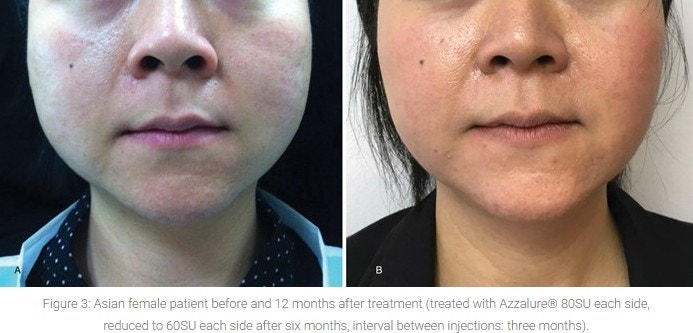
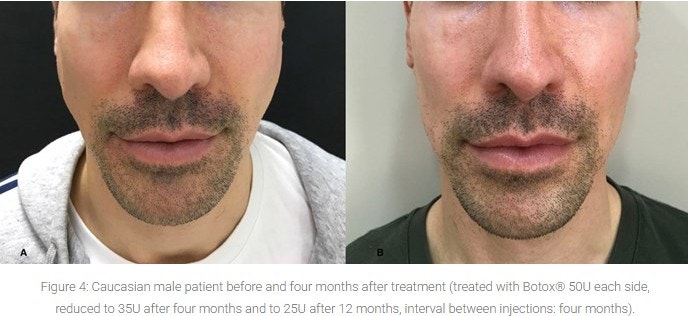
However, because the human body always tries to maintain balance,
when the function of a specific muscle decreases, other muscles step in to compensate.
The change that can occur at this time is
Compensatory Hypertrophy.
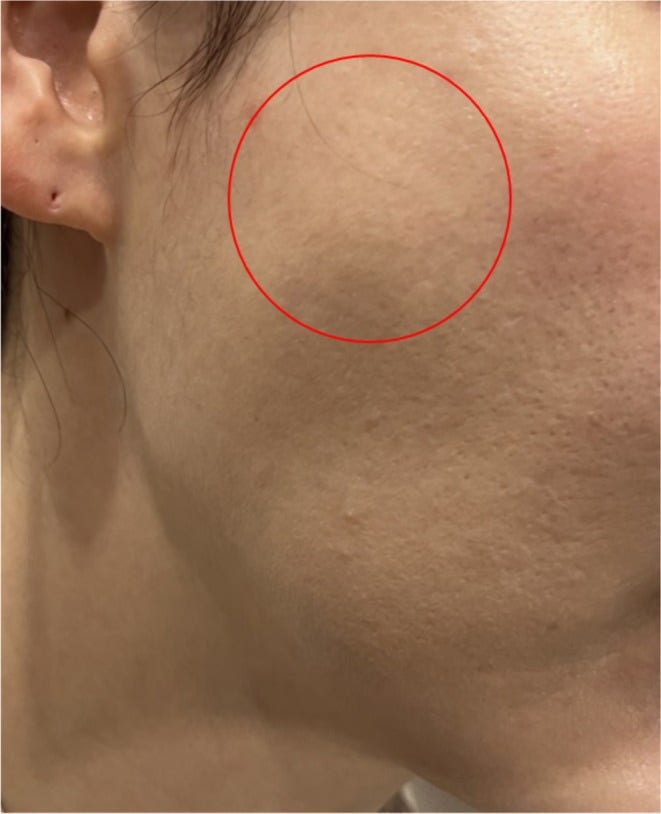
Simply put,
👉 it is a phenomenon where if one muscle rests, another muscle works harder.
Muscles we use when chewing food
The process of chewing food involves more complex muscle collaboration than you might think.
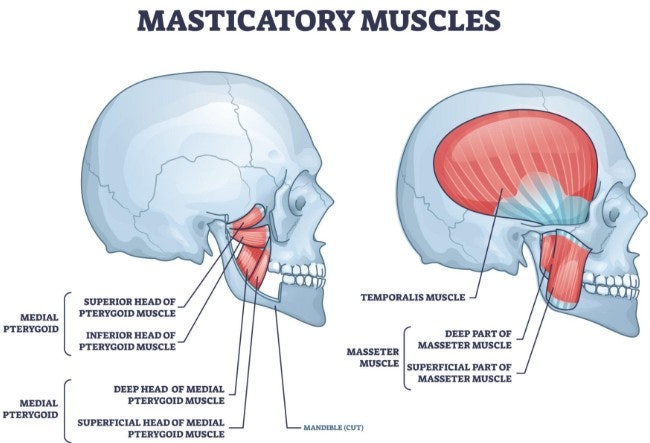
The primary masticatory (chewing) muscles are:
• Masseter
• Temporalis
• Medial pterygoid
These muscles work together to move the jaw.
So, when the strength of the masseter weakens,
the body naturally uses other chewing muscles more.
As a result,
• the temple area may appear more developed, or
• the upper part of the masseter may look more prominent.
Actually reported forms of compensatory hypertrophy
① Temporalis Hypertrophy (a feeling of bulging temples)
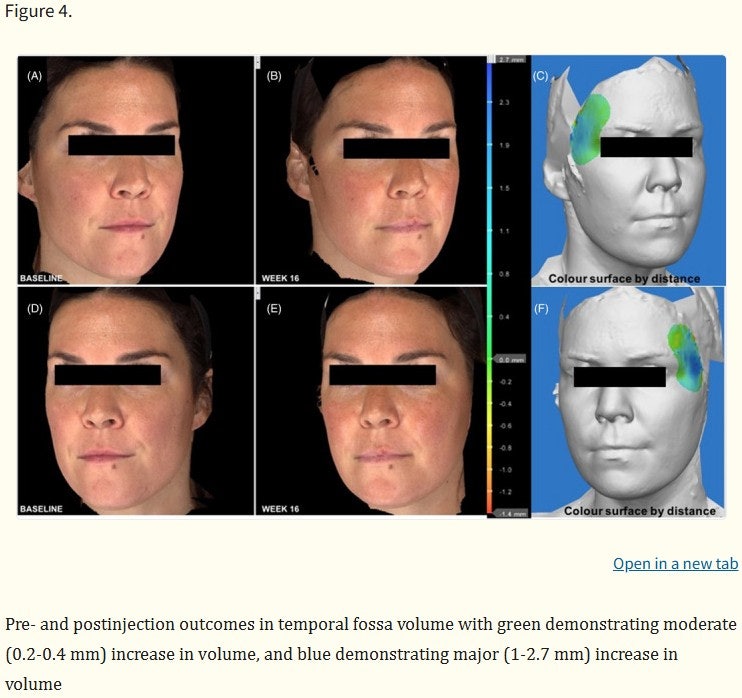
Studies have observed that after masseter Botox,
there is an increase in muscle thickness and stiffness of the temporalis.
This is because as the masseter weakens, the temporalis takes on more of the chewing function.
The changes patients typically feel are as follows:
• A feeling that the temples are bulging
• The upper part of the face looks wider
• A feeling of tension headaches in the temples
This can be especially noticeable if you have a habit of clenching your teeth.
② Upper Masseter Bulging
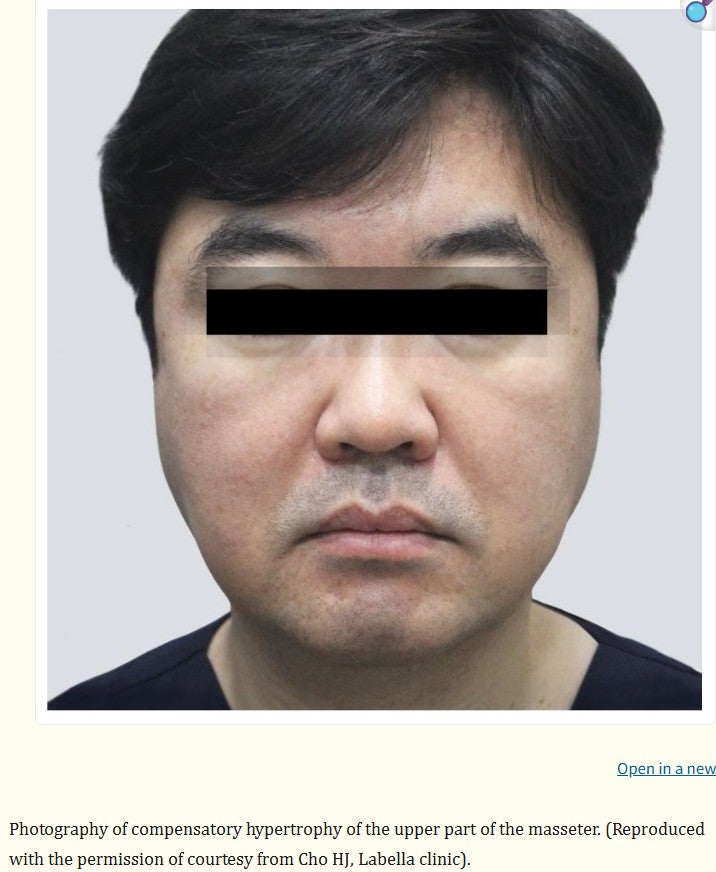
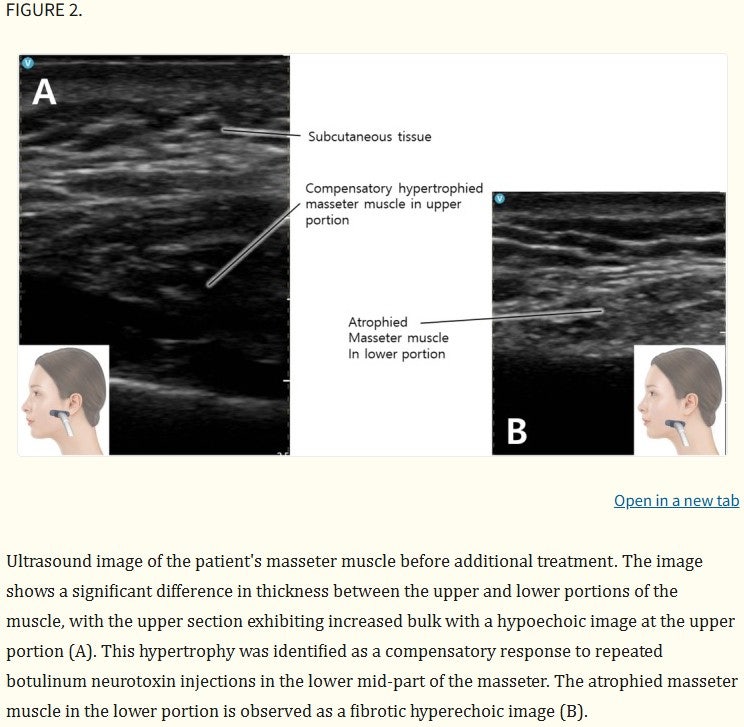
If square jaw Botox is repeatedly injected mainly into the lower part of the jaw,
the lower masseter becomes thinner,
while the upper masseter is used relatively more,
→ which can result in only the upper part bulging out.
In academic papers, this is described as
Compensatory masseteric bulging.
Reasons why it is more common in clinical practice than expected
Compensatory hypertrophy is more likely to occur in the following cases:
✔ When injected mainly into the lower masseter
✔ When the dosage is low or the distribution is uneven
✔ Bruxism (teeth grinding) or strong chewing habits
✔ Long-term repeated procedures
In other words, rather than simply ‘reducing the jaw muscle,’
it is important to consider the overall balance of the chewing muscles.
Changes felt by patients
These are expressions frequently heard during actual consultations:
‘My jaw has shrunk, but my temples seem to be bulging.’
‘The upper part of my face looks wider.’
‘My cheeks feel more sunken.’
Most of these are
changes that occur as the overall muscle balance of the face shifts.
Prevention Methods (Doctor’s Perspective)
1️⃣ Comprehensive evaluation of the masseter
The masseter is a wider muscle than you might think.
• superficial
• deep
• upper
Instead of just looking at the lower part,
it is crucial to check the overall thickness and movement.
2️⃣ Evaluation of the temporalis
This is especially important for the following patients:
• Those with bruxism
• Those with headaches
• Those with a well-developed temple area
If necessary, combining it with temporalis treatment makes the facial balance look more natural.
3️⃣ Checking chewing habits
Patient education is also important.
• Frequent gum chewing
• Eating hard foods
• Teeth clenching
If these habits persist, muscle development can be maintained.
4️⃣ Distributed injection
Rather than strongly paralyzing just one area,
distributing the injections while considering the direction of muscle action
is a way to reduce compensatory hypertrophy.
Key Takeaways
Compensatory hypertrophy after square jaw Botox is not so much a faulty procedure
👉 as it is a natural muscle compensation mechanism of our body.
Therefore, what matters is not just looking at the jaw muscles,
but considering the balance of all the masticatory muscles across the entire face.