2026-07-03
Dark Circles
Dark circles are a clinical sign caused by various factors like fat protrusion, tear trough deformity, pigmentation, and vascular issues. Accurate diagnosis is key to effective treatment.

What we commonly call ‘dark circles’ is not actually a medical term.
‘I have severe dark circles.’
This is something I hear very often in the clinic.
However, ‘dark circle’ is not a strict medical term.
In reality, it is more of a convenient expression used by patients
to describe all color changes, shadows, and structural depressions
seen under the eyes, specifically in the infra-orbital area.
In fact,
the paper by *Park et al.*,
‘Treatments of Infra-Orbital Dark Circles by Various Etiologies’,
explains that dark circles are not a single disease,
👉 but rather a clinical finding caused by various etiologies.
Dark circles are not a ‘color’ problem, but a ‘cause’ problem.
Many people simply think of dark circles as
‘the under-eye area turning black,’
but the paper classifies them by cause
and emphasizes that the treatment approach for each is completely different.
Based on this paper,
dark circles are largely caused by the following factors acting alone or in combination.
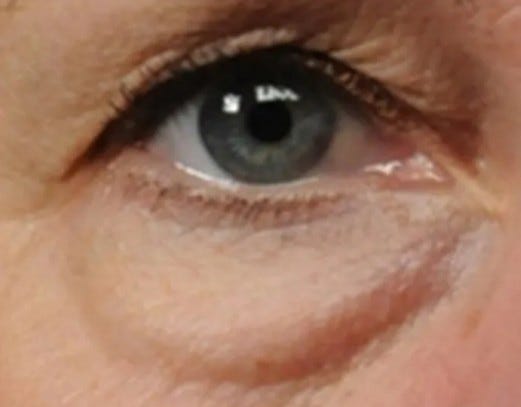
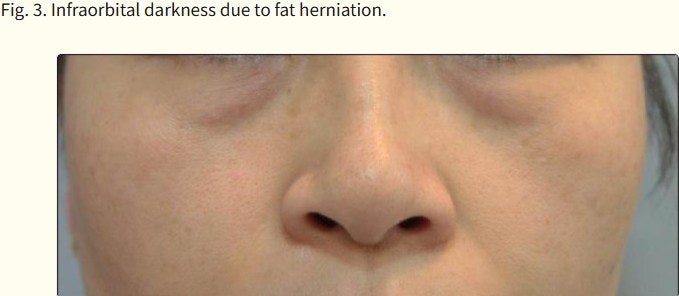
1️⃣ Protruding infra-orbital fat
As we age,
the septum and soft tissues supporting the under-eye fat weaken,
causing the fat to push forward and form eye bags.
The paper also explains
👉 that in this case, the main cause of dark circles is not pigmentation,
but the protruding fat and the shadow that forms beneath it.
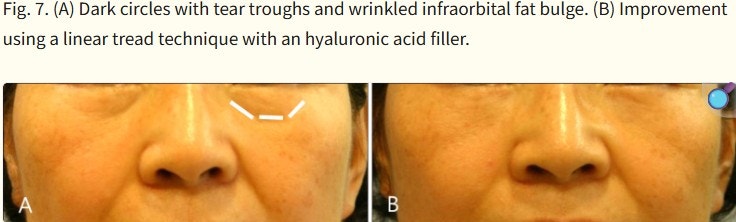
If fat protrusion is pronounced → Surgical correction is most effective.
If it is not yet severe →
By compensating for the tear trough depression next to the protruding fat
and leveling the surface,
highly satisfactory non-surgical improvement is possible.
2️⃣ Tear trough deformity
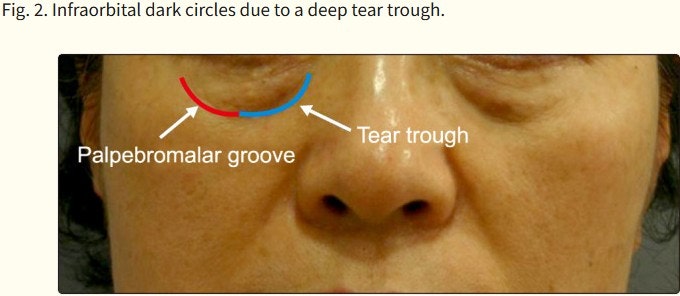
👉 The type that responds best to filler treatments.
This is when there isn’t much under-eye fat, but the tear trough is deep,
creating a valley-like shadow when light hits it.
The paper describes this type as structural shadowing,
noting that the under-eye area can look dark and tired even without actual color changes.
👉 ‘It is not black; it looks dark because it is sunken.’
In this case,
through appropriate under-eye fillers
and structural correction extending to the mid-cheek groove (Indian band) if necessary,
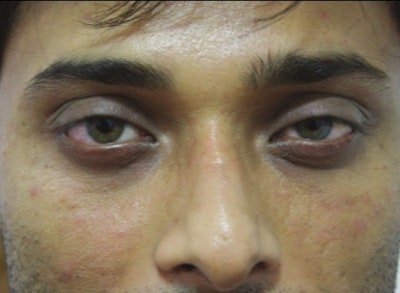
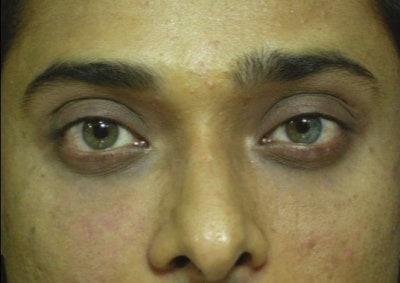
naturally flattening the under-eye area
will significantly improve a tired-looking appearance.
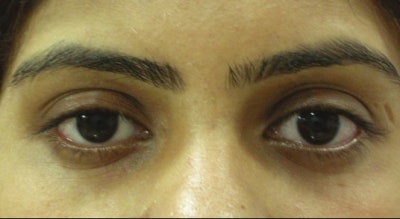
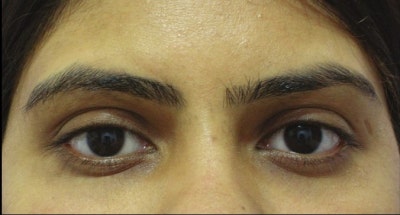
3️⃣ Pigmented dark circle
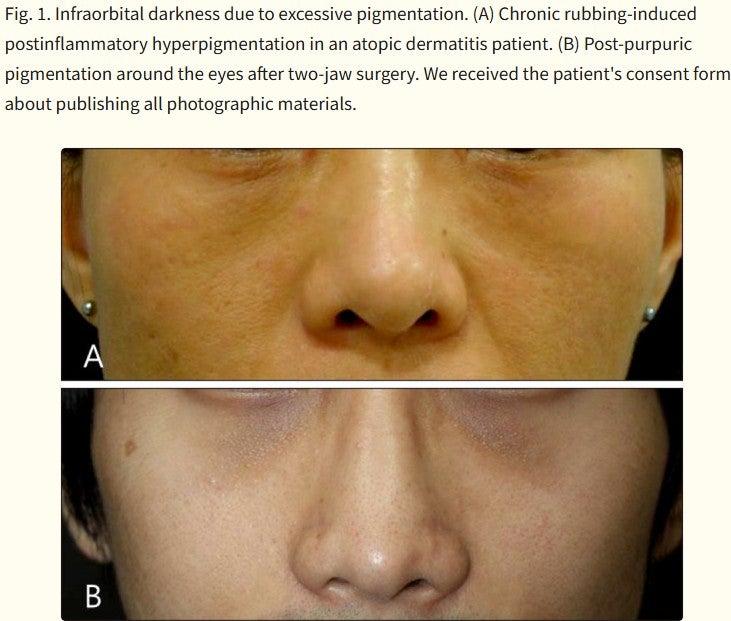
This is when the under-eye area is not sunken,
but appears overall dark
with a brown or gray tone.
The paper
👉 classifies this type as a melanin-related dark circle,
making it clear that fillers are not a fundamental treatment.
The core of treatment in this case is
✔ Pigment improvement
✔ Dermal quality enhancement.
I would recommend
Pigmentation toning lasers
Potenza + Juvelook booster
Combined with radiofrequency (RF) lasers
Followed by checking for areas that need filler correction later.
The paper also explains that
compared to using lasers alone,
combining treatments that improve skin structure yields more stable pigment improvement.
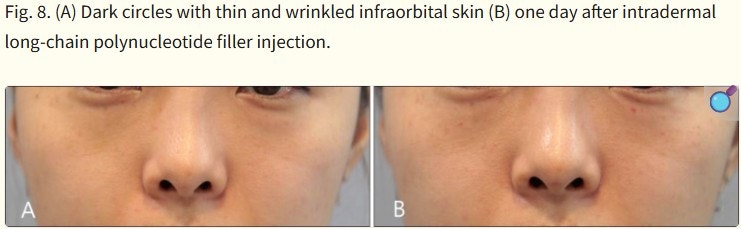
4️⃣ Vascular dark circle
This is a type where the under-eye skin is thin,
causing the underlying veins to show through with a bluish-dark tint.
In the paper,
👉 decreased dermal thickness and vascular permeability are cited as the main causes.
In this case,
using vascular lasers,
RF + skin boosters,
and a small amount of filler
to make the dermal layer dense and compact will noticeably reduce the visibility of blood vessels.
What type does Mr. Kim Soo-yong have?
Based on the paper, Mr. Kim Soo-yong’s case
👉 is closer to a complex case of Type 2 (Tear trough deformity) + Type 3 (Pigmented dark circle).
In such cases, as emphasized in the paper,
✔ Pigment and skin tone improvement treatments
✔ Structural depression correction
must be approached simultaneously for high satisfaction.
Conclusion – The key to treating dark circles is ‘accurate cause diagnosis’
The consistent message emphasized by this paper is singular:
👉 Dark circles cannot be resolved with a single treatment.
👉 Only treatments tailored to the cause produce natural results.
When approached by accurately distinguishing
the under-eye structure, skin thickness, pigmentation, and vascular status,
you can transition from a tired impression ❌
and a dark, aged-looking image ❌
✔ to a bright,
✔ soft,
✔ and much younger-looking impression.