2026-07-03
What Is Rosacea?
Learn about rosacea, a chronic skin condition causing facial redness, acne-like bumps, and eye irritation. Discover its subtypes, symptoms, and common triggers.
If your face frequently turns red, or if you constantly feel a burning and stinging sensation on your facial skin,
you might suspect rosacea.
Rosacea is a chronic skin condition that is relatively common among adults.
It is known to affect about 1 in 20 people worldwide.
Because rosacea is often confused with acne, allergic dermatitis, and seborrheic dermatitis,
having an accurate understanding of it is important.
Characteristics of Rosacea
Rosacea is typically characterized by red rashes and acne-like breakouts around the nose and cheeks.
Typical symptoms include the following:
✔ Easily flushed face
✔ Red rashes or frequent flushing
✔ Stinging and burning sensations
✔ Itching or dry skin
✔ Red, acne-like bumps
Rosacea is a chronic condition where symptoms repeatedly improve and worsen,
and it can be aggravated by the following factors.
Common Aggravating Factors
Stress
Alcohol (especially wine)
Strong sunlight
Hot foods
Saunas / Heat
Rosacea Can Also Affect the Eyes
Rosacea can affect not only the skin but also the eyes.
This is called **Ocular Rosacea**.
Typical symptoms include:
Bloodshot eyes
Itchy eyes
A gritty, sand-like foreign body sensation
Sensitivity to light
Small inflammations around the eyelids.
Types of Rosacea
In the past, rosacea was classified into **four subtypes**.
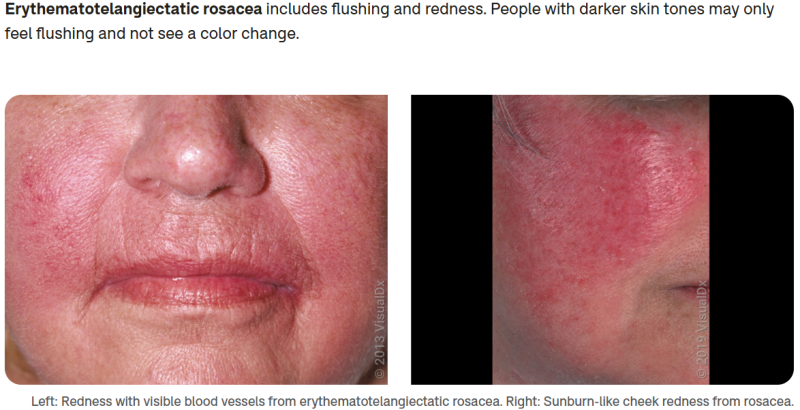
1️⃣ Erythematotelangiectatic Rosacea
Characteristics
Easily flushed face
Persistent redness
Dilated capillaries
On light skin, the red color changes are clearly visible,
but on darker skin tones, you may only feel a sensation of heat.
2️⃣ Papulopustular Rosacea
Characteristics
Red, acne-like breakouts
Pus-filled pustules
Background erythema (redness)
This is the form commonly referred to as **‘acne rosacea’**.
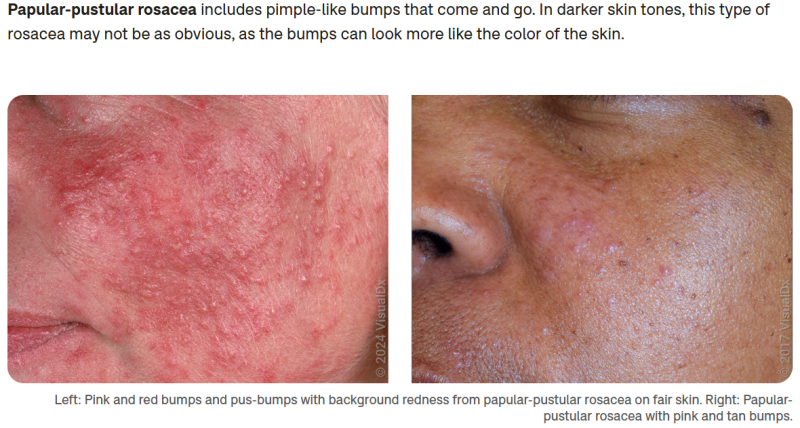
On darker skin tones, it may look like small bumps similar to your skin color rather than being red.
3️⃣ Phymatous Rosacea
Characteristics
Skin gradually thickens
Thickening of the skin on the nose
Enlarged pores
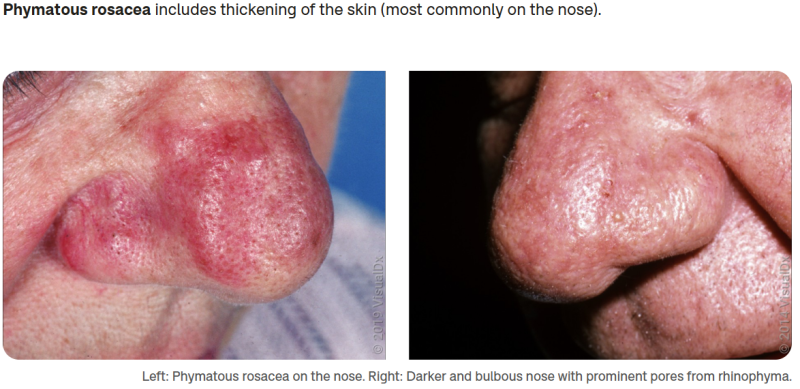
When it occurs specifically on the nose, it is called **rhinophyma**,
and it is more common in men.
4️⃣ Ocular Rosacea
This is rosacea that affects the eyes.
Typical symptoms
Bloodshot eyes
Stinging
Sensitivity to light
Eyelid inflammation
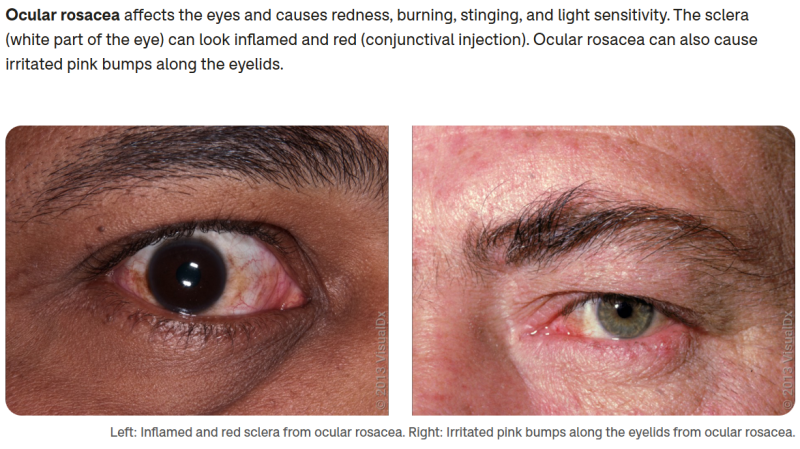
In severe cases, it can look like conjunctivitis.
Early Symptoms of Rosacea
Rosacea usually begins with the following symptoms:
Easily flushed face
A hot sensation on the face
Long-lasting redness
Over time, it can progress to:
➡ Red rashes
➡ Acne-like breakouts
➡ Skin thickening
Why Symptoms Vary from Person to Person
Rosacea symptoms can vary greatly from person to person.
In particular, its appearance differs depending on skin tone.
For example:
✔ Light skin
→ Easily flushed, redness
✔ Dark skin
→ Instead of redness,
→ it may appear as brown or dusky color changes.
Summary of Common Rosacea Symptoms
The typical characteristics are as follows:
Easily flushed face
Persistent redness that looks like a sunburn
Burning sensation on the skin
Stinging / Itching
Dryness
Acne-like bumps
Skin thickening (especially on the nose)
Eye irritation symptoms
Rosacea Affects Quality of Life More Than You Think
According to research,
about 90% of rosacea patients
👉 feel a loss of self-confidence or
👉 report experiencing stress about their appearance.
Is It Rosacea or Another Condition?
Rosacea symptoms can look similar to the following conditions:
Acne
Eczema
Lupus
Allergic dermatitis
What Is Rosacea? Symptoms, Treatment, Images, and Prevention


Written by Alina Goldenberg, MD, MAS, FAAD | Reviewed by Mandy Armitage, MD
Updated on January 14, 2026