2026-07-03
Mechanism of Action of Salivary Gland Botox
Learn how salivary gland Botox works by blocking acetylcholine, reducing saliva production, and shrinking the gland size for a slimmer lower face.

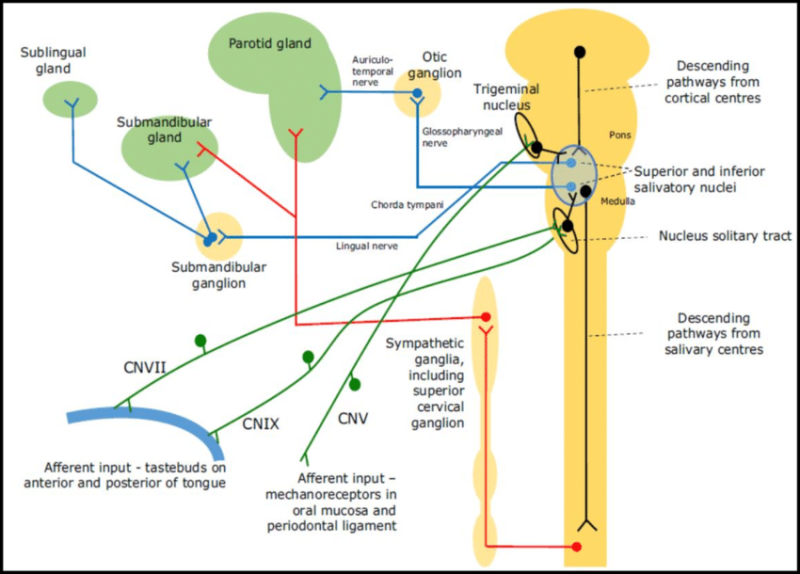
1️⃣ Basic Mechanism – Acetylcholine Blockade
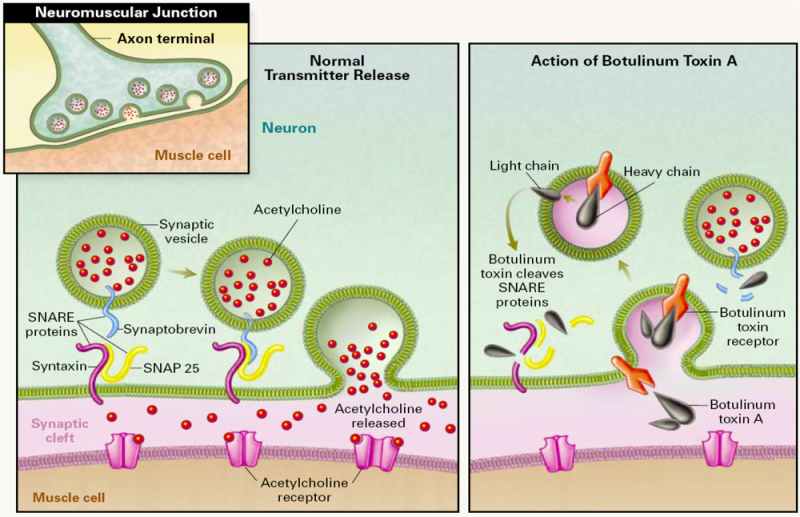
Botulinum toxin blocks the release of acetylcholine at the nerve endings.
Normally, in the salivary glands:
Parasympathetic nerve activation
Acetylcholine secretion
Salivary gland cell stimulation
Increased saliva production
This is the standard process.
When Botox is injected:
→ Acetylcholine secretion is blocked
→ Salivary gland cell stimulation decreases
→ Saliva production decreases
This sequence of events occurs.
2️⃣ Suppression of Salivary Gland Function
The parotid gland is composed of serous acini structures.
When acetylcholine is reduced:
Decreased release of secretory granules
Decreased fluid movement
Decreased saliva production
As a result, the function of the salivary gland is suppressed.
3️⃣ Reduction in Salivary Gland Size (Atrophy)
When the salivary gland is used less:
Decreased cellular activity
Acinar cell shrinkage
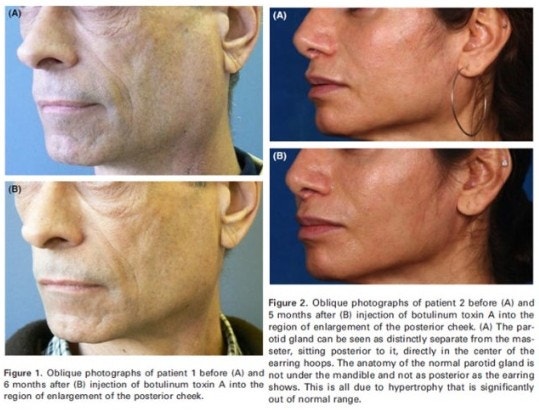
Decreased glandular volume occurs.
In other words, functional decline leads to structural shrinkage.
Therefore, this results in:
Reduced facial width
A slimmer lower face.
4️⃣ Functional Recovery After Nerve Regeneration
This is why the effects of botulinum toxin are not permanent.
Over time:
SNARE protein regeneration
Nerve terminal recovery
Recovery of acetylcholine secretion
As these occur, salivary gland function returns.
Thus, the effects typically last for 3 to 6 months.
5️⃣ Changes Confirmed in Studies
Decreased saliva production
Decreased salivary gland thickness
Decreased facial width
In particular, the most significant reduction is often seen between 6 to 8 weeks.
6️⃣ Why Does the Salivary Gland Shrink? (Core Concept)
Functional suppression
→ Decreased saliva production
Decreased usage
→ Tissue atrophy
These two processes combine to reduce the size of the salivary gland.