2026-07-03
XERF Lifting Series Part 3: Differences Between XERF, Thermage, and Density RF Lifting Devices
Discover the differences between XERF, Thermage, and Density RF lifting devices. Learn how their unique energy delivery methods affect skin tightening and what matters most for your treatment.

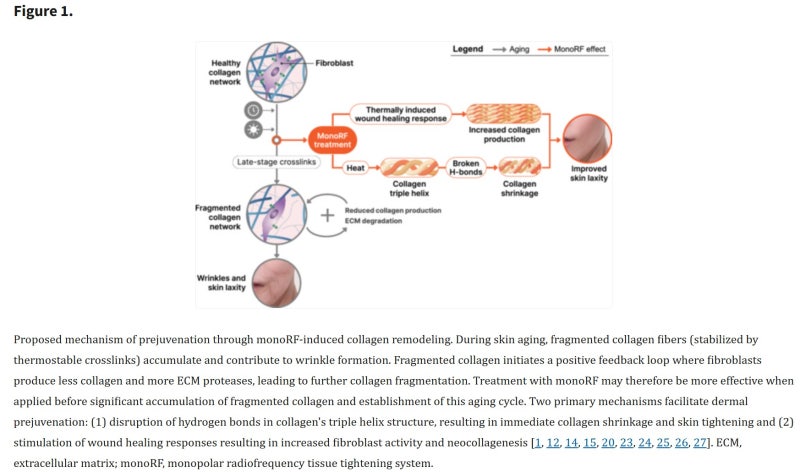
In the previous article, we discussed:
The principles of XERF lifting
Lifting design
Retaining ligaments, which serve as lifting points.
During lifting consultations, many people ask questions like:
‘Is Thermage better?’ ‘Is XERF better?’ ‘Is Density the better choice?’
To get straight to the point, it is difficult to say that one device is unconditionally better than the others.
Because each device has slightly different energy delivery methods and characteristics,
the best choice can vary depending on the patient's skin condition and degree of sagging.
Today, we will briefly summarize the characteristics of three representative radiofrequency (RF) lifting devices:
Thermage
Density
XERF
Common Principles of Radiofrequency (RF) Lifting
All three are lifting devices that utilize radiofrequency (RF) energy.
When RF energy is delivered to the skin, heat is generated by the tissue's electrical resistance.
As this heat acts on the collagen inside the skin, it leads to:
Collagen contraction
Fibroblast activation
Generation of new collagen
Through these processes, skin elasticity is improved.
In other words,
the basic mechanism of action is the same for all three devices.
The differences lie in their energy delivery methods and structural designs.
1️⃣ Thermage
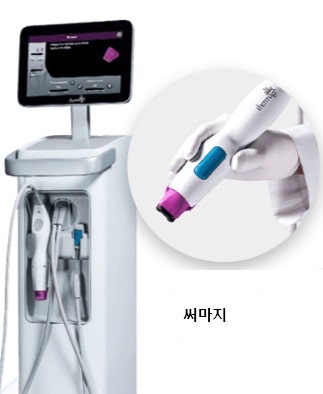
Thermage is the oldest monopolar RF lifting device.
Its main characteristics are:
Monopolar RF
Dermis-focused heating
Overall skin tightening
With a vast accumulation of clinical experience and data,
it is a representative RF lifting device that has been used for a long time.
2️⃣ Density
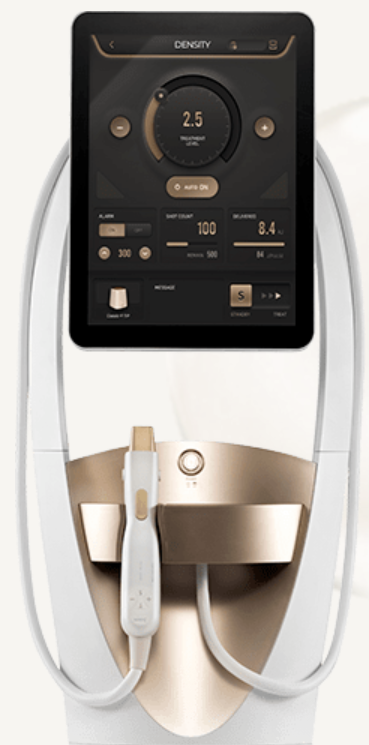
Density is an RF lifting device that can utilize two different types of tips.
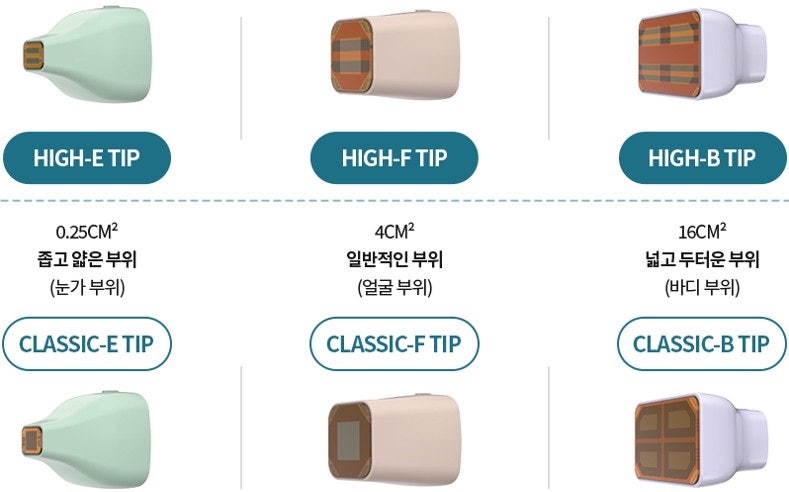
Classic Tip
The Classic Tip uses monopolar RF,
and its mechanism of action is almost identical to that of Thermage.
It induces collagen contraction and regeneration, offering expected improvements in skin elasticity.
However, clinically, there are cases where the duration of the effect is somewhat shorter than that of Thermage.
High Tip
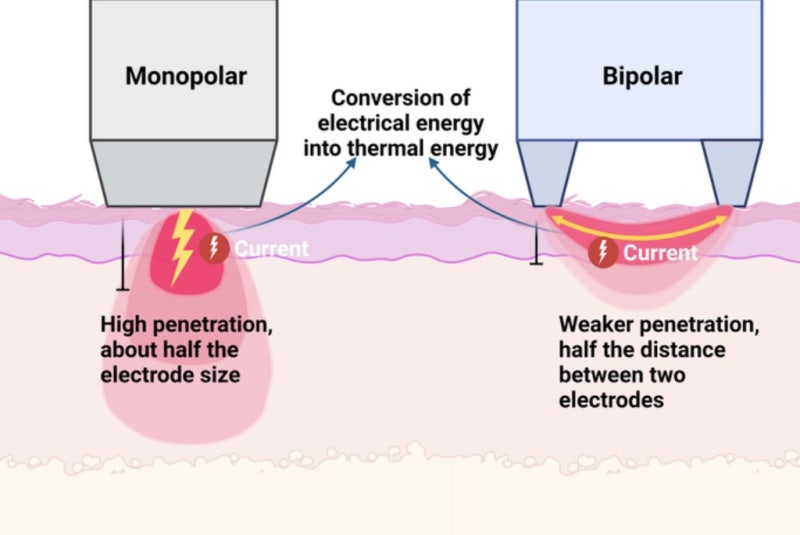
The High Tip features a structure where both monopolar RF and bipolar RF work together.
Because of this,
the pain is relatively mild,
and it can also affect the shallow dermal layer.
In some patients,
surface skin improvements such as
enhanced skin texture
and reduced pore size
may appear relatively quickly.
3️⃣ XERF

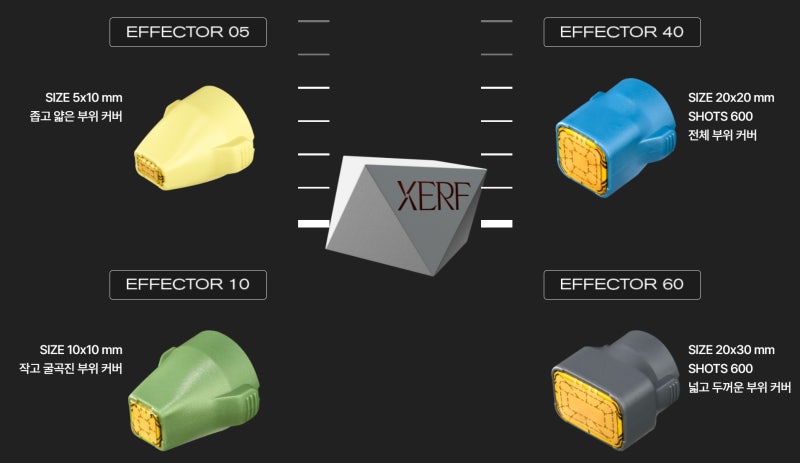
XERF is characterized as a dual-frequency monopolar RF device.
While conventional monopolar RF devices often use a single frequency,
XERF is designed to use
6.78 MHz
and 2 MHz
simultaneously.
Through this design,
it can be understood as a structure that simultaneously targets
dermal collagen remodeling
and heating that reaches deeper tissues.
What Matters Most When Choosing a Lifting Device
Many people ask,
‘Which device is the best?’
but in reality, there are factors more important than the device itself.
For example, the appropriate approach can vary depending on:
Skin thickness
Fat distribution
Degree of sagging
Facial structure
Additionally, in lifting procedures,
treatment design elements such as
Lifting points
Shot placement
Energy density
are extremely important.
Therefore, even with the same device,
the results can differ depending on how the procedure is performed.
Summary
The characteristics of these representative RF lifting devices can be summarized as follows:
Device | Characteristics |
Thermage | Long-established monopolar RF, overall elasticity improvement |
Density | Can use two types of tips |
XERF | Dual-frequency RF |
However, in actual lifting procedures, factors such as
Facial structure analysis
Setting lifting points
Treatment design
can be more crucial than the device itself.
In the next article,
under the topic ‘When do the effects of XERF lifting appear?’,
we will explain the timing of lifting effects,
immediate vs. delayed effects,
and the duration of the lifting results.