2026-07-03
Under-Eye Hollows & Fat Prolapse — Treatment Guidelines by Type
Discover the ultimate treatment guidelines for under-eye hollows and fat prolapse. Learn how customized approaches based on structure, sagging, and skin quality ensure natural results.
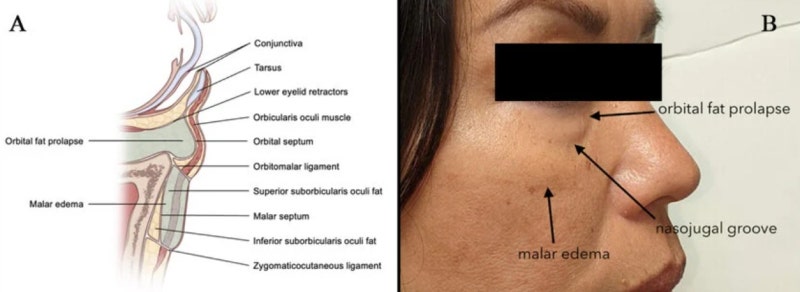
The under-eye area is not a region where a single procedure can be applied just because it looks ‘hollow.’
You must accurately distinguish between structure, sagging, and skin condition to achieve natural and long-lasting results.
Today, I will detail the treatment guidelines applied to each under-eye type.
1. Under-Eye Fat Prolapse (Mild Cases)
This is a condition where the under-eye area bulges out, though it does not yet require surgery.
In this case, many people think the fat needs to be removed, but tightening is actually the key.
This is because the bulging is often caused by a loss of elasticity in the tissues holding the fat in place, rather than the fat itself.
Caution is needed here, as using excessive filler can have the opposite effect, making the area look even more swollen.
Recommended procedures include Eye Ultherapy and Eye Sherf, approaching the issue by tightening both the retaining ligaments and the skin.
2. Structural Hollowing (Volume Loss)
This is the most basic type, where the under-eye area sinks, looking like dark circles or creating a disconnected appearance with the front cheeks.
Since it is simply a state of volume loss, structural restoration is the core of the treatment.
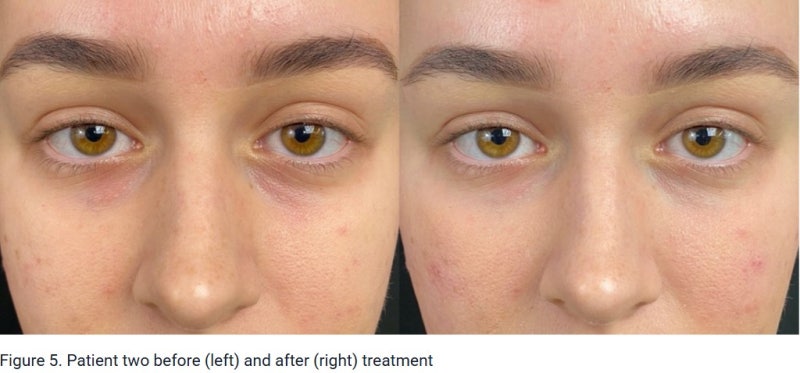
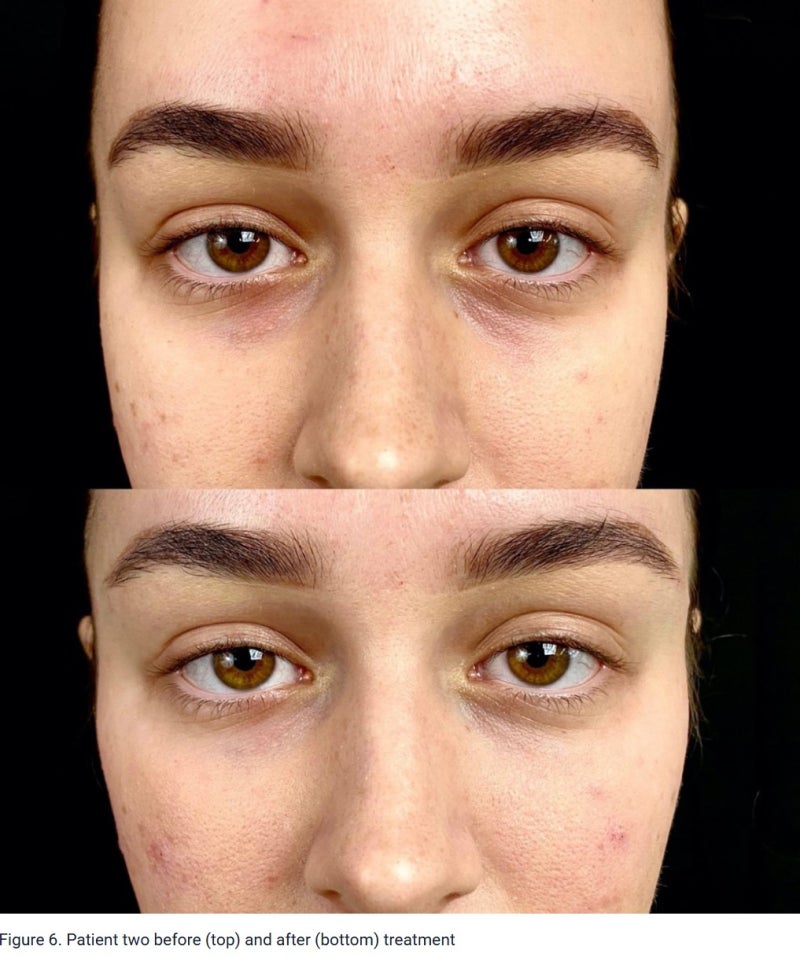
The important thing is not simply the concept of ‘filling,’ but designing a natural connection between the hollowed area and the surrounding tissues.
You must approach this by layering the deep and shallow layers to achieve a natural result without any awkwardness.
Recommended treatments include Jamver volume threads, or a combination of Restylane Eyelight + Belotero Soft.
3. Structural Hollowing + Sagging (Volume + Laxity)

This is the type most frequently encountered in actual clinical practice.
It is characterized by slight skin sagging along with hollowing, blurred boundaries between the under-eyes and cheeks, and becomes especially prominent when smiling.
In this case, using only filler will make it look more bulging, while doing only lifting will leave the hollows behind.
Therefore, the key strategy is to necessarily approach lifting and volume together.
For lifting procedures, Eye Ultherapy, Eye Thermage, and Eye Sherf are applied, combined with the volume treatments (filler or volume threads) described earlier. Only by proceeding with both together can you achieve a natural result.
4. Skin Issues (Skin Quality)
This is when the skin itself is the problem, rather than hollowing or sagging.
This applies to cases where the under-eye skin is thin and weak, has fine lines (crepey texture), or when pigmentation and dark circles are the main concerns.
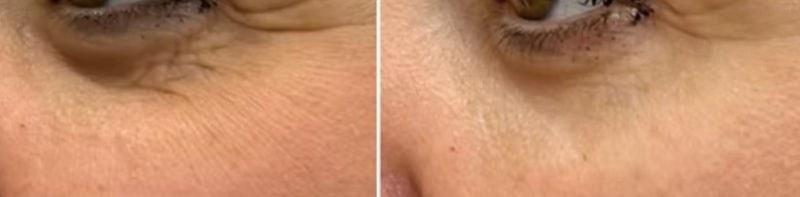
You should not try to solve this type with fillers. If the skin quality itself does not improve even after filling the volume, the results will not be natural, and it may even cause side effects where the skin looks stretched.
The approach should be directed toward regenerating the skin itself and restoring its elasticity.
Recommended procedures include Eye Thermage, Eye Sherf, Juvelook Eye, Eye Rituo, and Skin Botox, proceeding in a way that stimulates skin regeneration and tightening simultaneously.
5. The Most Important Conclusion
The under-eye is not an area that can be resolved with a single procedure.
Structural issues must be filled, sagging issues must be pulled, and skin issues must be regenerated.
Only by looking at these three together can you create ‘subtly beautiful under-eyes.’
The under-eye is not an area for simply filling hollows, but an area where structure, sagging, and skin are designed together.
Unconditionally injecting fillers or solely performing lifting without distinguishing the type will ultimately lead to unnatural results.
Accurate diagnosis and a customized approach by type are the beginning of under-eye procedures.