2026-07-03
Are You Using Sunscreen Correctly? – The Final Part of the Misused Cosmetics Series
A comprehensive guide on how to properly use sunscreen, explaining the differences between UVA and UVB, the true meaning of SPF, and why reapplying is crucial for anti-aging.

From Vaseline and cleansing oils to wiping toners, sheet masks, and peeling gels,
we have covered various cosmetics that many people ‘know are good but actually use incorrectly.’
For this final installment, we will discuss the most important yet most misunderstood product: sunscreen.
1️⃣ You Need to Understand UV Rays Accurately
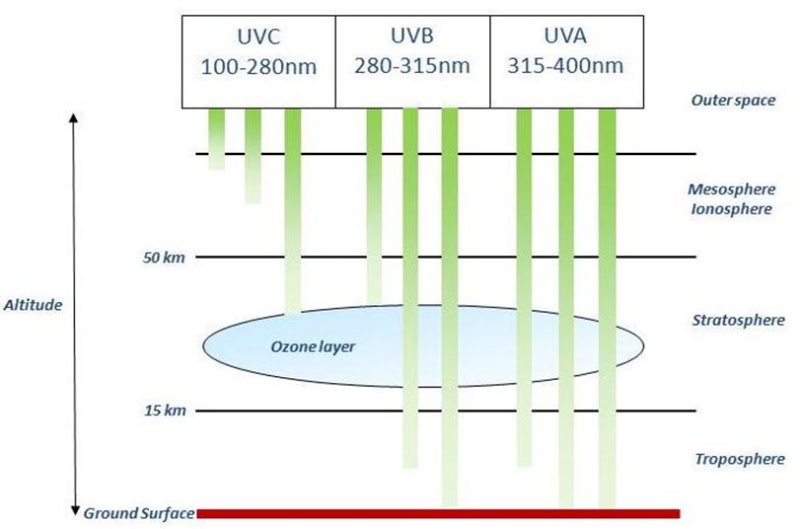
There are three main types of UV rays.
✔ Ultraviolet C (UVC)
Mostly blocked by the ozone layer.
✔ Ultraviolet B (UVB)
Accounts for about 5%.
It has strong energy and causes sunburns and erythema (redness).
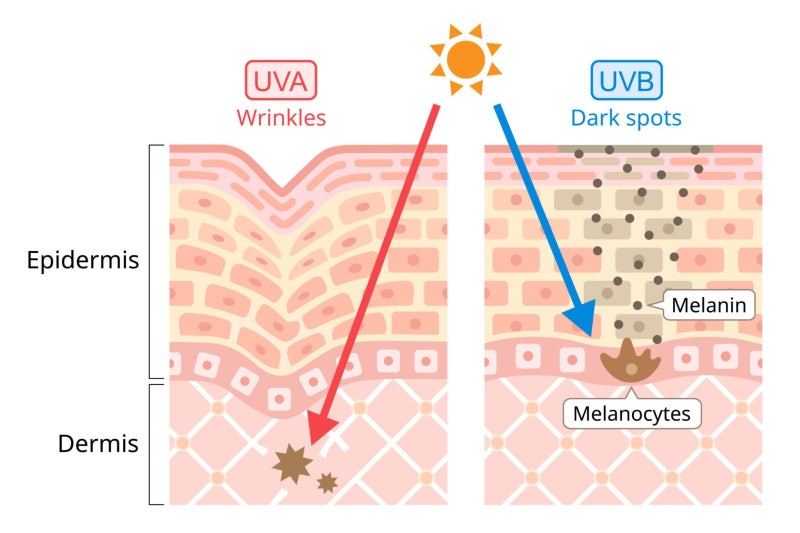
✔ Ultraviolet A (UVA)
Accounts for about 95%.
Known as everyday UV rays.
It is the main culprit behind pigmentation and skin aging.
Many people think, ‘I only need to be careful when the sun is strong,’
but in reality, UVA is what ages the skin.
2️⃣ Chemical vs. Physical Sunscreen: What is the Difference?
✔ Chemical Sunscreen
Absorbs into the skin and converts UV rays into heat.
Must be applied 20 to 30 minutes before going out to be effective.
✔ Physical Sunscreen (Mineral Sunscreen)
Reflects UV rays from the skin surface.
Effective immediately upon application.
3️⃣ SPF: Many People Completely Misunderstand It
SPF = UVB protection rating.
SPF | Protection Rate |
15 | 93% |
30 | 97% |
50 | 98% |
100 | 99% |
The important point here is that the difference in protection rate between SPF 50 and 100 is a mere 1%.
So why is the number so much larger?
→ It represents an increase in protection ‘time.’
For example:
SPF 50 → Approx. 750 minutes
SPF 100 → Approx. 1500 minutes
However, the core issue lies elsewhere.
4️⃣ In Reality, Protection Time is Much Shorter
Sunscreen ratings are based on applying 2mg/cm² (about the size of a large coin).
But in reality, most people only use about 1/4 of the recommended amount.
This means that instead of 7 hours of protection from SPF 30,
→ it actually lasts only about 1 to 2 hours.
Reapplying sunscreen every 2 hours is a fundamental rule.
5️⃣ Do I Need to Wear It Indoors?
✔ If there are glass windows:
UVA rays pass through → Sunscreen is necessary.
However, if you have UV-blocking films, curtains, or blinds, you do not necessarily need to apply it.
✔ What about UVB?
It is mostly blocked by glass windows.
In other words, indoors, the PA rating (UVA protection) is more important than SPF.
6️⃣ Doesn't Clothing Block UV Rays?
The important concept here is UPF.
UPF 50 → 98% protection (rash guards, parasols).
Standard cotton t-shirt → UPF 5 (allows 20% of UV rays through): Regular clothing provides almost no UV protection.
7️⃣ Are Shade and Cloudy Days Safe?
Many people let their guard down here.
✔ Shade
Due to scattering in the air and UV rays reflecting off the ground or water,
the actual protection is only around UPF 5 to 15.
It barely blocks anything.
✔ Cloudy Days
UVB is reduced.
But UVA remains almost the same.
Conclusion: Sunscreen is essential even on cloudy days and in the shade.
Key Takeaways
UVA is what ages the skin.
SPF is more about ‘time’ than the protection rate.
Actual protection time is much shorter than you think.
Reapplying sunscreen every 2 hours is fundamental.
It is also needed indoors depending on the conditions.
Clothing, shade, and clouds do not provide complete protection.
Final Thoughts
Sunscreen is not just a ‘summer-only product’; it is the most basic treatment to prevent skin aging.
This fundamental step is more important than expensive procedures.
Applying it well and applying it correctly—just following these two rules will make a noticeable difference in your skin.