2026-07-03
Under-Eye Hollows & Fat Protrusion Part 2 - The Core of Natural Treatment Design
Learn the core principles of natural under-eye treatments, focusing on anatomical layers, seamless volume connection, avoiding overcorrection, and improving skin quality.
In the previous article, we explained the treatment criteria by type, dividing the under-eye area into structure, sagging, and skin issues.
So, how should we approach the actual procedure?
Even for the same under-eye area, the results can vary completely depending on where, how much, and in what order the treatment is applied.
In this article, we will summarize the core of treatment design for creating a natural-looking under-eye area.
1. The Core of Under-Eye Treatment is the Layer
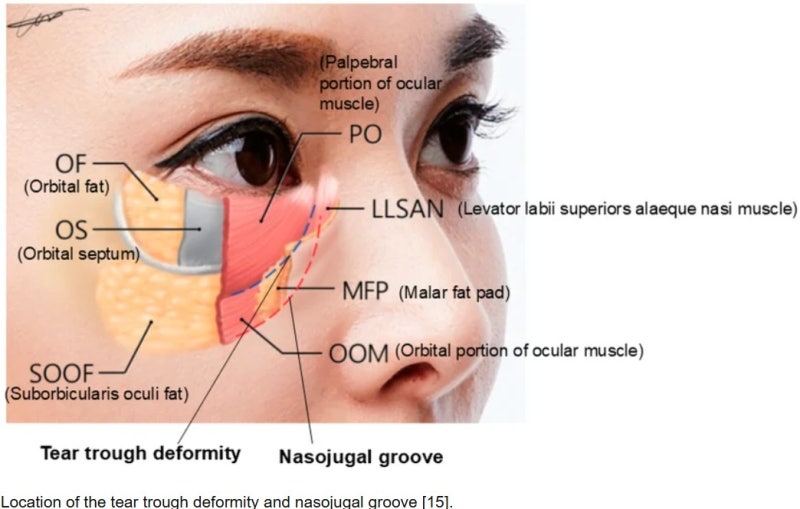
The under-eye area is not a simple space but a structure composed of multiple layers.
The deep layer above the bone
Retaining ligaments and supporting structures
The muscle layer
The skin layer
Each of these layers plays a different role.
If a treatment is performed on only one layer without considering this structure, problems will arise.
If only the deep layer is filled, it may still look hollow,
and if only the shallow layer is filled, it can become bumpy or cause the filler to show through.
Therefore, the key is to approach it by dividing it into layers.
2. Fillers and Volumizing Treatments are About Connection, Not Quantity
A common mistake in under-eye treatments is simply filling the hollow areas.
However, what is actually more important than the volume itself is the sense of connection.
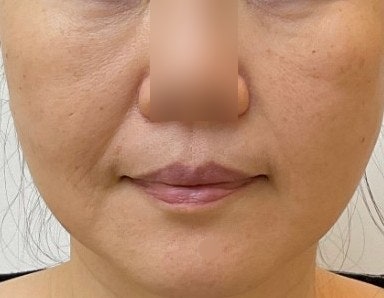
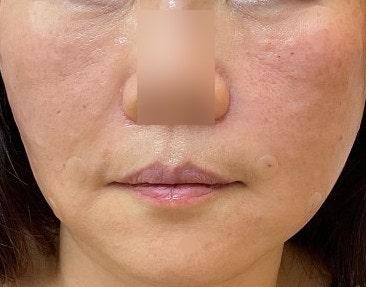
The under-eye area, front cheeks, and nasolabial folds are connected as a single structure.
If this connection is broken, shadows form, resulting in a tired-looking impression.
Therefore, fillers should be designed not to fill specific areas but to smoothly connect the structures.
The combination of Restylane Eyelight (deep layer) and Belotero Soft (shallow layer) is an ideal pairing for approaching the deep and shallow layers separately.
3. The Under-Eye Area is Where Overcorrection Causes the Most Problems
The skin under the eyes is extremely thin.
Because of this, excessive treatments become noticeable immediately.
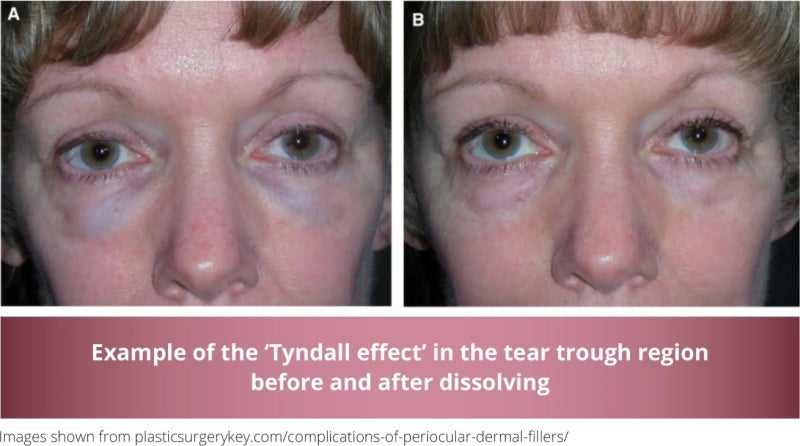
If too much filler is injected, it can look bulging, and if it is injected into a shallow layer, a bluish tint (Tyndall effect) may occur.
Overcorrection can actually create a more tired-looking impression.
For the under-eye area, it is more important to control the amount so it is not excessive, rather than filling it completely.
4. Lifting is About Supporting, Not Pulling
Lifting procedures are often understood simply as pulling things upwards.
However, the concept is different for the under-eye area.
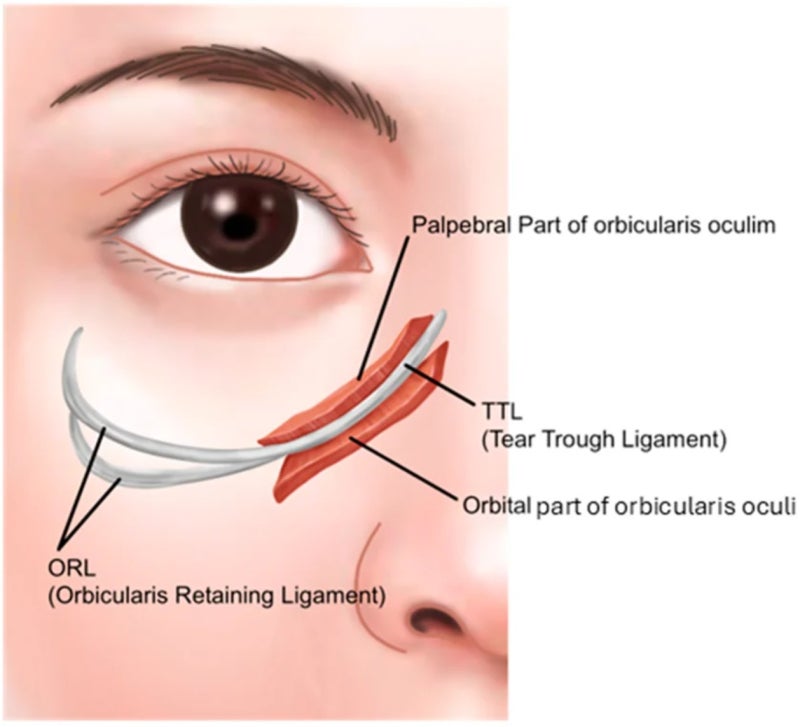
The core is to support and stabilize the sagging structures.
Restoring the retaining ligaments and skin elasticity allows the filler to settle more stably.
Treatments like Eye Ultherapy, Eye Thermage, and Eye Sherf are effective on their own,
but their completeness increases when applied together with volumizing treatments.
5. Skin Condition is the Factor that Determines the Result
One of the reasons under-eye results look unnatural is when the skin condition is not adequately considered.
If the skin is thin, has many fine lines, or is dark in color,
it is difficult to achieve a natural result just by filling the volume.
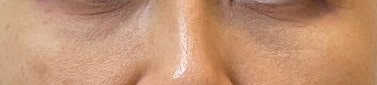
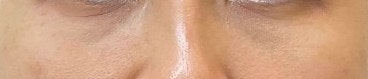
In these cases, treatments that improve the skin itself are also necessary.
Treatments such as Juvelook Eye, Eye Rituo, and Skin Botox
help improve skin quality and enhance the completeness of the results.
Conclusion
Under-eye treatments cannot be resolved with a single method.
You must approach it by dividing the depth, connecting the structures, supporting the sagging, and improving the skin condition simultaneously.
Only when these four elements are balanced can a natural and seamless result be created.
One-Line Summary
The under-eye area is not a place to just fill, but a place to design the layers and structures together.