2026-07-03
Dermatology Injection - Juvelook
Discover the benefits of Juvelook and Juvelook Volume, popular collagen boosters for slow aging. Learn about their differences, synergistic treatments, and safety considerations.
2-3️⃣ Collagen Booster
✔ The Era of Slow Aging: Why Collagen Boosters?
The current trend in anti-aging is shifting from
**‘Preventing aging’ → ‘Aging as slowly as possible (Slow Aging)’**.
The most important factor in slowing down aging is
👉 maintaining a skin condition that can ‘effectively produce’ collagen and elastin.
Therefore, recently,
rather than procedures that lift already sagging skin,
collagen boosters designed to maintain current elasticity and skin quality for a long time
are becoming increasingly popular even among younger age groups.
In fact, celebrities known for their youthful appearance
often consistently combine radiofrequency treatments with collagen boosters every year.
The biggest change I have noticed over my 10+ years of performing procedures is that
‘We are no longer in an era where people get treatments because they have aged significantly, but rather in an era where people get treatments to maintain their current skin.’
✔ Juvelook vs. Juvelook Volume: Here is the Difference
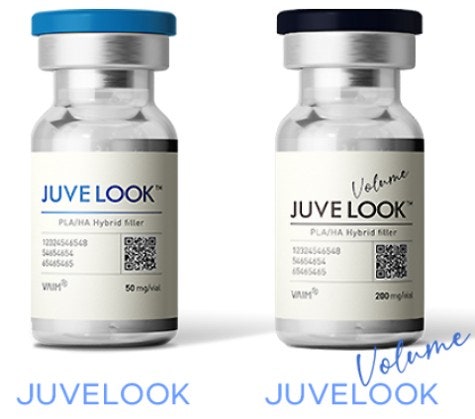
Juvelook: A skin booster concept
Juvelook Volume: While it does not completely replace fillers,
it is used for natural volume enhancement
(👉 If a filler is a 1, think of Juvelook Volume as a 0.2 to 0.3 level)
✔ What is Juvelook?
Juvelook is
a collagen booster that combines **PDLLA (biodegradable polymer) + Hyaluronic Acid (HA)**
to induce collagen production.
PDLLA
Stimulates collagen and elastin production
Decomposes into water and carbon dioxide after about 6 months → No residue left in the body
HA
Attracts moisture immediately after the procedure to provide instant hydration
👉 After the procedure
Immediate effect: Hydration from HA
Mid-to-long-term effect: Collagen and elastin production from PDLLA
Since collagen production typically begins in earnest after 4 to 6 weeks,
it is recommended to schedule treatments at intervals of about 2 months rather than 1 month.
✔ Juvelook vs. Juvelook Volume at a Glance
Category | Juvelook | Juvelook Volume |
Primary Use | Skin Booster | Natural Volume Enhancement |
Ingredient Content | PDLLA 42.5mg + HA 7.5mg | PDLLA 170mg + HA 30mg |
Particle Size | 24 μm | 51 μm |
Main Effects | Improvement of skin texture/tone, fine lines, elasticity | Volume + Juvelook effects |
Procedure Method | Manual injection, injector, Potenza pumping tip | Injection using a cannula |
Injection Layer | Epidermis to upper dermis | Lower dermis to subcutaneous fat layer |
Treatment Area | Entire face | Mid-to-lower face excluding eyes and nose |
👉 Juvelook Volume
can be understood as naturally improving the entire mid-to-lower face, excluding the under-eye area.
✔ How to Maximize Juvelook Effects
Juvelook can be administered via
manual injection,
injectors like Derma Shine,
or Potenza pumping tips.
However,
👉 using an injector or
👉 combining it with radiofrequency treatments like Thermage or Potenza
yields the best collagen production effects.
As we age,
the materials for collagen and elastin decrease,
and the dermal layer ‘factory’ that produces them also ages.
✔ Juvelook → Supplies collagen materials
✔ Thermage/Potenza → Operates the collagen factory
→ The most ideal synergy when combined
⚠️ Regarding Juvelook Volume and Blindness Incidents
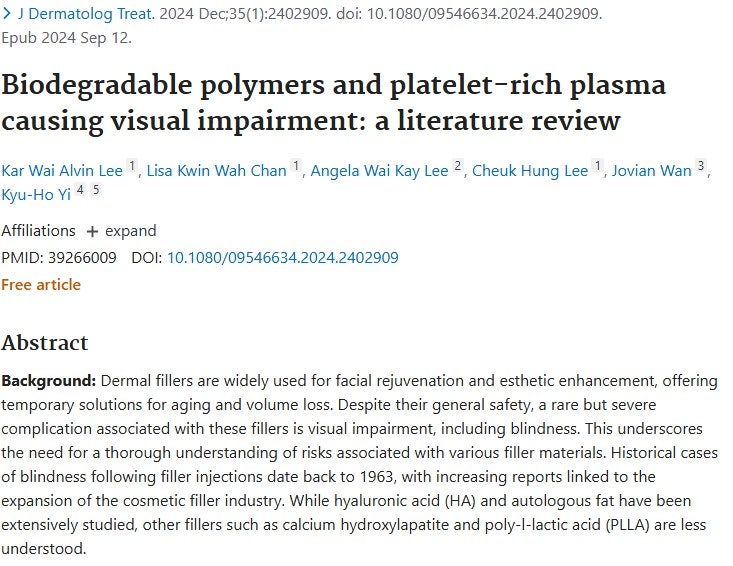
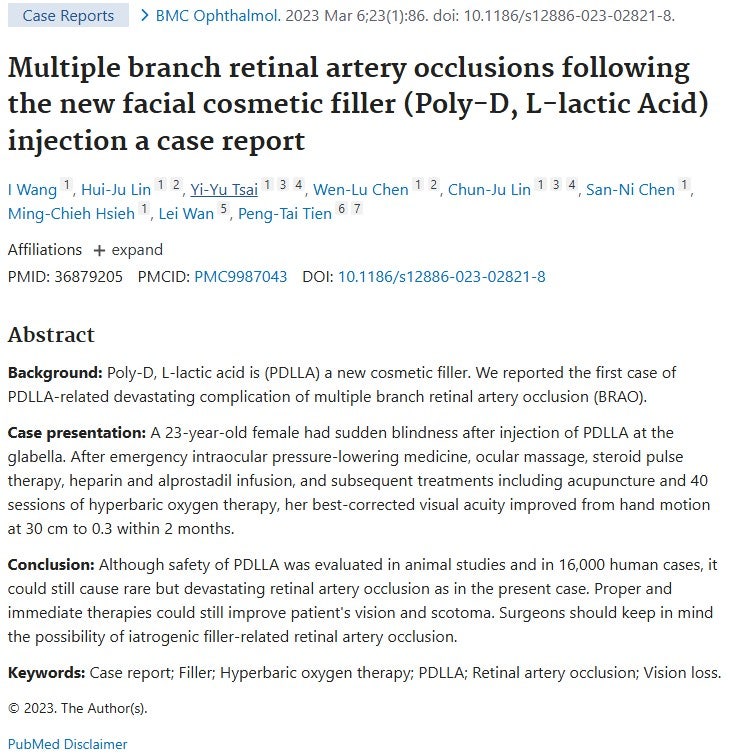
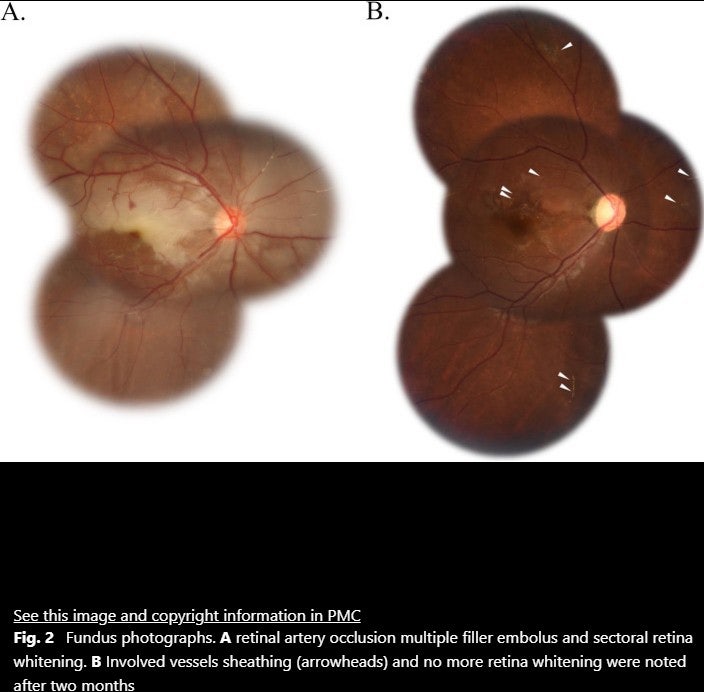
This is a paper discussing cases of blindness (3 cases) that occurred after Juvelook Volume procedures.
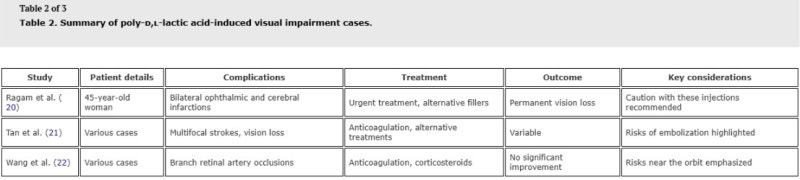
This is another paper discussing a case of blindness after a Juvelook Volume procedure.
In the past,
it was perceived that vascular occlusion and blindness incidents mainly occurred with fillers,
and collagen boosters were relatively safe.
However, with recent reports of blindness following Juvelook Volume procedures,
it has been re-emphasized that collagen boosters can also carry a risk of vascular occlusion.
Juvelook Volume
is composed of PDLLA 170mg + HA 30mg,
and although very rare, there is a possibility of necrosis and blindness.
✔ Principles for Safety
Needles ❌ → Use a cannula
Strong pressure ❌ → Inject slowly
Thoroughly understand high-risk vascular areas
Strictly avoid high-risk areas during the procedure
Statistically, fillers or fat grafts might be more dangerous, but
no procedure is 100% safe.
With the awareness that ‘all procedures carry potential risks,’ I will prioritize safety above all else during treatments.