2026-07-03
If Only I Had Gotten Chin Filler Before My Hair and Makeup Shoot...
A personal account of getting chin filler to fix a dented chin line. Learn why proper technique, mentalis botox, and the Ricketts line are crucial for achieving a natural, balanced facial profile.


Recently, on the day we had a YouTube shoot at the clinic,
I got my hair and makeup done for the first time in a while and excitedly took some photos.
The makeup turned out beautifully, but
when I closed my mouth and went ‘hmm,’
a particular part of my jawline really caught my eye.
There was a dented line spreading out from the tip of my chin to both sides, looking like a number ‘3’.
It was something that had always bothered me a little,
but seeing it so clearly in the photos was really disappointing.

Chin Filler: It’s Accessible, But Shouldn’t Be Done Carelessly
Chin filler is a relatively low-risk and accessible procedure,
making it quite common.
However, in reality, the results vary drastically depending on:
✔ Design
✔ Injection method
✔ Choice of filler
A particularly common method is
the ‘1-POINT method,’ where a large amount is injected into a single spot using a needle.
If done incorrectly, this technique carries the risk of creating
a lantern jaw
or a witch’s chin.
Therefore, even when using a needle,
it is essential to first check for facial asymmetry,
inject alternately on the left and right sides,
and meticulously control the volume only in the most sunken and flat areas.
My Approach to Chin Filler
When performing chin filler treatments, I don’t rely solely on a needle from the start.
First, I use a cannula (a long, blunt, straw-like tube)
to connect the sunken areas on both sides of the jawline, creating overall balance.
After that, I switch to a needle to
✔ fill in any lacking areas
✔ and delicately refine the lines.
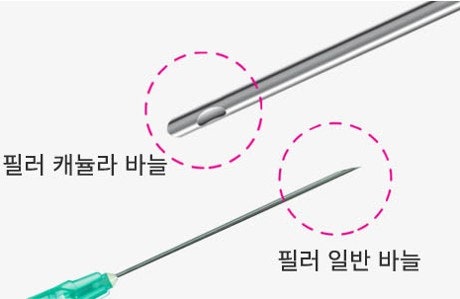
This prevents an artificial-looking chin that protrudes in just one spot,
allowing for a naturally continuous jawline.
Why We Must Consider the Marionette Lines
If you only correct the tip of the chin during the procedure
and completely ignore the area around the marionette lines,
it is easy to accidentally create another form of a lantern jaw or witch’s chin.
Conversely, if the chin tip, marionette lines, and jawline are corrected as a single, cohesive flow,
there is no unnaturalness after the procedure.
Asymmetries in length and height are improved simultaneously,
making the face actually look smaller
while achieving a V-line effect.
Post-Procedure Changes – Resolving My ‘3-Shape Line’
I finally decided to get the procedure done myself,
proceeding immediately with a nerve block instead of numbing cream.
The anesthesia worked perfectly, feeling much like a dental block.
After the treatment,
whether my face was resting
or I was closing my mouth and going ‘hmm,’
my jawline connected smoothly without any breaks,
and the 3-shape line that had bothered me the most was naturally resolved.
Chin Filler + Mentalis Botox Should Go Hand-in-Hand
For people like me, whose lower face (below the philtrum) is underdeveloped,
the mentalis muscle (chin muscle) is often quite strong.
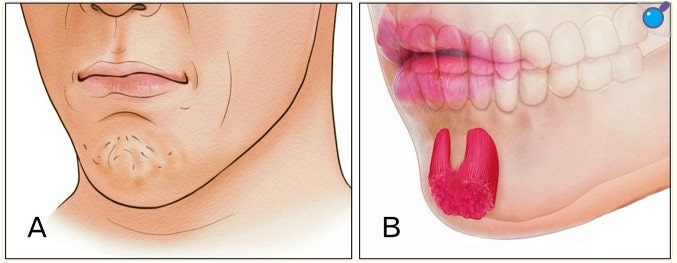
In this case,
cobblestone chin wrinkles form easily,
the chin looks even more recessed (like a weak chin),
and the shape of the filler can easily be ruined.
Therefore, for this facial type,
👉 mentalis botox must be combined with the filler.


Relaxing the tension in the mentalis muscle
allows the shape to set much more smoothly
and has the added benefit of extending the longevity of the chin filler.
In practice, when mentalis botox is
performed accurately based on anatomical guidelines,
it significantly elevates the perfection of the chin filler.
The Filler I Chose – Restylane Lyft
The product used for this procedure was Restylane Lyft.
This filler
is particularly strong for areas that require structural support, like the nose and chin,
and it rarely loses its shape over time.
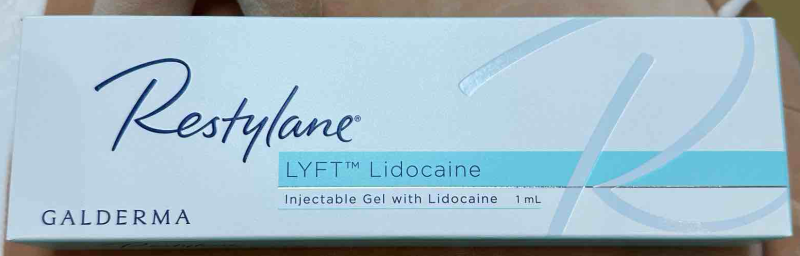
Personally,
👉 it is my number one recommendation for nose and chin fillers.
I believe that in filler procedures, rather than simply asking ‘how much to inject,’
knowing which filler to use and where to place it is a crucial mark of a practitioner’s skill.
The ‘Ricketts Line’: A Must-Explain Concept for Chin Fillers
There is a concept I always explain when performing chin fillers.
It is the Ricketts line.
Proposed by dentist Robert Ricketts, the Ricketts line is
a standard for evaluating the ideal facial profile.
It is a straight line connecting the most prominent point of the nose
to the most prominent point of the chin.
The ideal proportions are achieved when
the upper lip is about 4mm behind this line
and the lower lip is about 2mm behind it.
Why is the Ricketts Line Important?
The Ricketts line serves as
a baseline for overall facial balance when designing
nose fillers,
chin fillers,
and lip fillers.
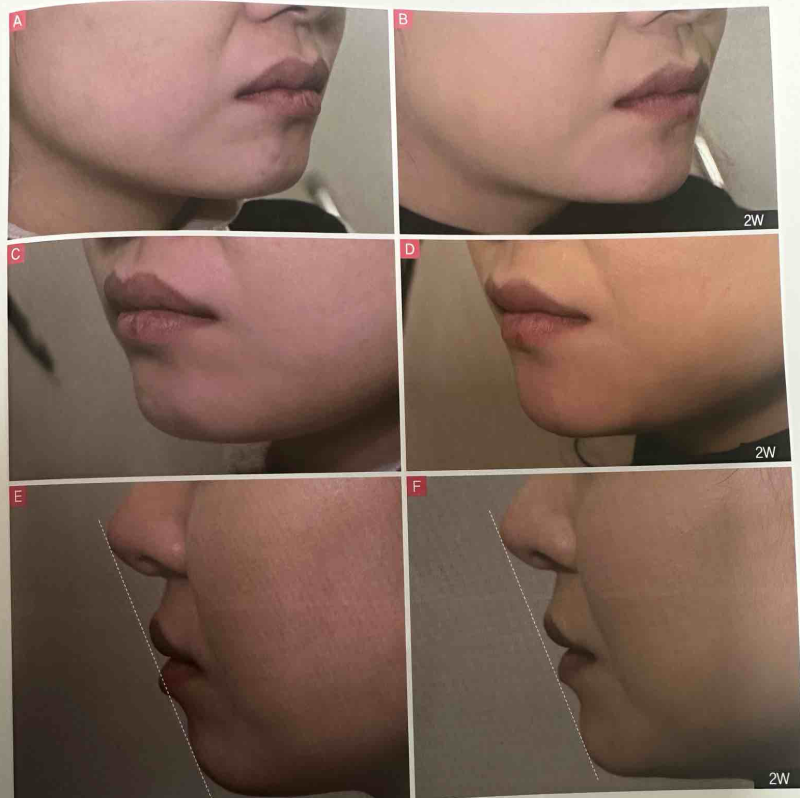
Whether you have a low nasal bridge,
a recessed lower face,
a weak chin, or a protruding mouth,
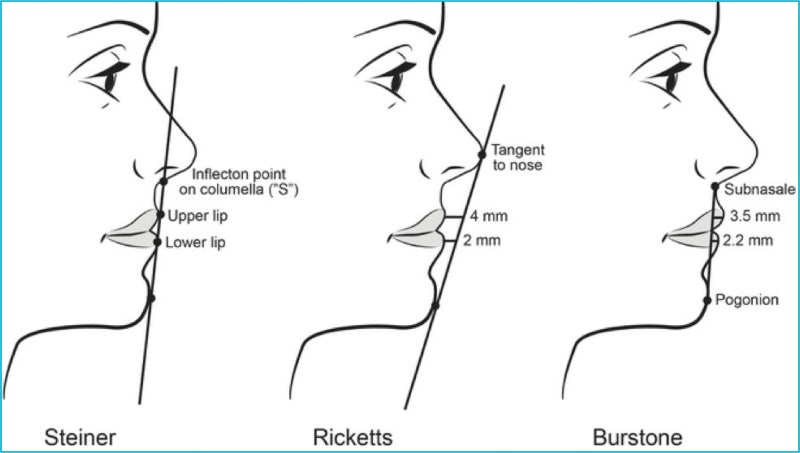
tailoring the design to each individual’s facial structure
👉 while considering the Ricketts line leads to significantly higher post-procedure satisfaction.
Rather than simply making the chin protrude,
I meticulously design and perform the procedure
so that the side profile and overall facial proportions look their absolute best.
In Conclusion
Chin filler is a procedure that can dramatically change your impression with just a small adjustment,
which is why the design and approach are so critical for this area.
A treatment that creates balance and harmony across the entire face, rather than just ‘making the chin stick out’—
that is what I believe chin filler should be.