2026-07-03
Potenza + Exosome (2. Is it good for rosacea?)
Potenza is not a first-line treatment for acute rosacea, but combined with Exosomes, it helps stabilize the skin environment and improve texture once inflammation subsides.
Potenza cannot be used as the first-line treatment for rosacea!
Rosacea is
not simply a skin condition that causes facial redness,
where the skin barrier weakens,
vascular responses become hypersensitive,
and heat, stinging, and breakouts repeatedly occur,
resulting in a complex state of skin instability.
Therefore, for rosacea-prone skin,
while it is important to consider whether to undergo a ‘strong treatment,’
👉 it is far more important to determine the timing and purpose of the treatment.
A crucial point to note
Because rosacea
has very diverse causes and stages,
Potenza is not the primary treatment in all cases.
In the acute inflammatory phase
or when heat and redness are severe,
in these states,
👉 medication and soothing-focused care should be prioritized.
Once the skin condition has stabilized to some extent,
it is common to consider Potenza as an adjunctive, phased treatment.
Potenza’s approach: ‘Skin environment regulation’ rather than ‘strong stimulation’
Potenza is not a laser that peels off the skin surface,
but a procedure that delivers radiofrequency (RF) energy into the dermis through microneedles.
The expected role of Potenza in rosacea-prone skin
👉 Rather than directly treating inflammation,
it calmly reorganizes the destabilized skin environment.
Through
this,
it can help regulate overactive sebaceous gland functions,
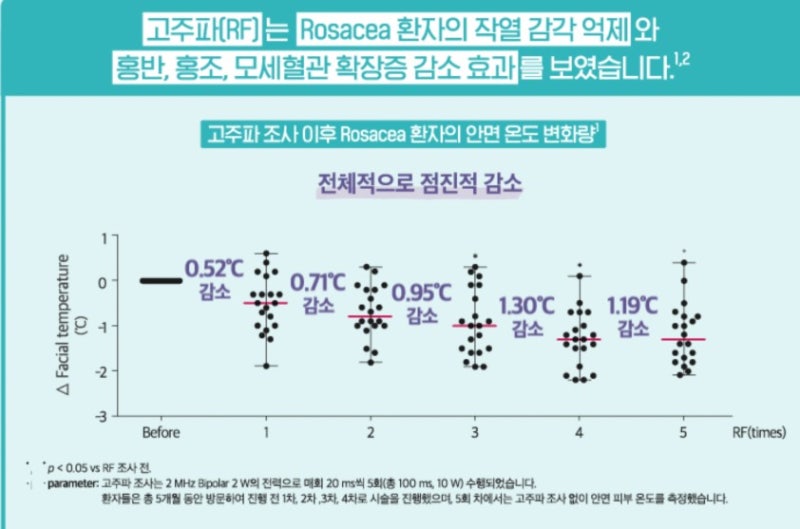
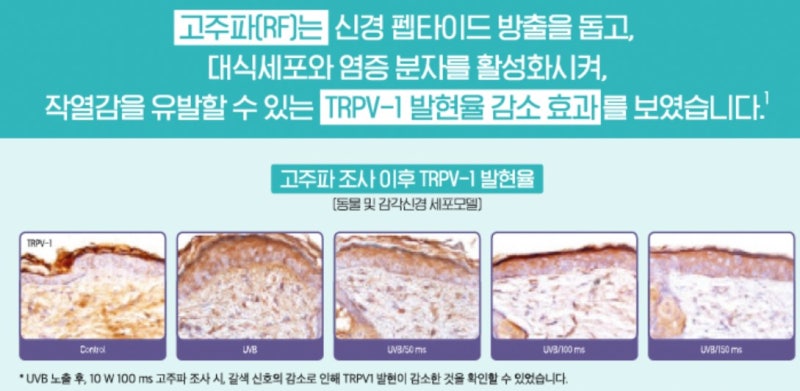
alleviate hypersensitive skin reactions to heat and stimuli,
improve rough skin texture caused by repeated inflammation,
and refine enlarged pores and skin tissue.
These are the benefits it can provide.
Key points for rosacea-prone skin
✔ Acute inflammation and heat must subside first
✔ The skin barrier and sebaceous gland functions are unstable
✔ Procedures that stimulate vascular responses should be avoided
In other words, rosacea is not a condition where lasers or procedures can be performed at every stage.
When rosacea is accompanied by acne and breakouts
Among rosacea patients,
redness and heat
overlapping with comedonal or inflammatory acne
and increased sebum secretion
are frequently seen occurring together.
In such cases,
Potenza
✔ without excessively stimulating sebaceous gland functions,
✔ reorganizes the skin environment where acne and breakouts recur,
✔ and can be an option to help improve pores and skin texture simultaneously.
Why Exosomes are used together (Especially important for rosacea-prone skin)
Because rosacea-prone skin
during the post-procedure recovery process
can easily become red from even minor stimulation,
recovery care can be considered part of the treatment.
Combining Exosomes after a Potenza procedure
can help alleviate post-procedure inflammatory responses,
improve skin recovery speed,
stabilize the skin barrier,
and reduce prolonged redness and heat.
With these expected benefits,
👉 for rosacea-prone skin, rather than Potenza alone,
the combination of Potenza + Exosomes is a more careful and effective approach.
In summary,
Rather than a ‘treatment procedure’ for rosacea, Potenza is a procedure that helps stabilize the environment where the skin reacts hypersensitively, while simultaneously addressing sebum, skin texture, and pore issues.
Especially
when rosacea, breakouts, and pore concerns are present together,
Potenza combined with Exosomes
can be a relatively gentle approach that takes skin recovery into consideration.
A point that must be distinguished
To emphasize once again,
❌ Acute phase rosacea
❌ Severe heat and burning sensations
❌ Active periods of red papules and pustules
👉 Potenza may not be suitable.
In these cases,
medication, soothing, and barrier recovery take priority,
and only after the skin condition has stabilized
is it a general approach to consider procedures in stages.