2026-07-03
Temple Filler
Temple filler creates a balanced and smooth facial contour when combined with forehead filler and botox, rather than being performed as a standalone procedure.

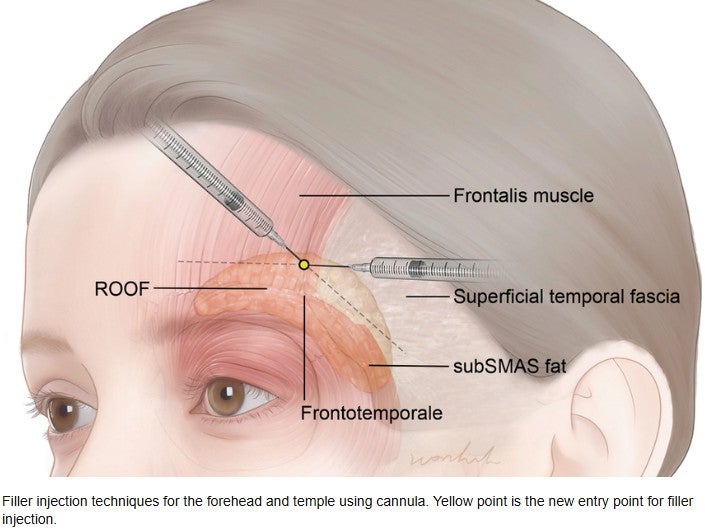
Temple Filler
Achieving forehead line balance
completed with forehead filler and forehead/frown line botox
The temple area
might not seem very visible from the side profile of the face,
but it is actually a crucial point that connects the forehead to the facial contour.
If the temples are sunken,
the forehead may appear flat,
or even if you get forehead filler, only the upper part may look protruded,
giving the impression of an angular face.
Therefore, for temple filler,
👉 rather than thinking of it separately from forehead filler,
it is important to approach it as part of the entire forehead line.
Why getting temple filler alone leaves something to be desired
If temple filler is performed alone,
the sunken areas can be filled,
but it is difficult to adequately account for
the height difference between the center and sides of the forehead,
the curve connecting the forehead to the temples,
and muscle movements according to facial expressions.
Especially when too much temple filler is injected,
👉 the forehead can look relatively more sunken,
giving the impression that the connection between the forehead and temples is ‘abruptly cut off’.
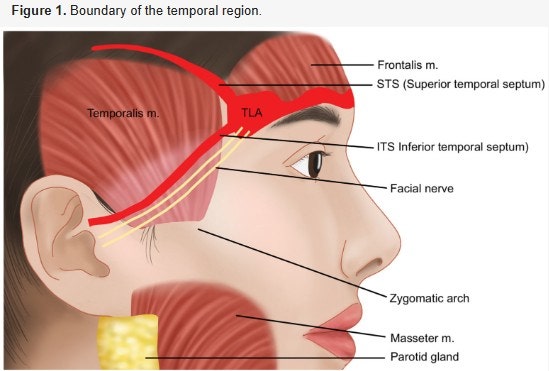
The forehead is ‘a single surface’, balance is key
The forehead is not a structure where the
center,
sides,
temples,
and glabella (frown lines)
move independently,
but rather a surface connected by a single curve.
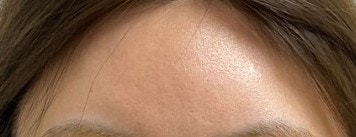
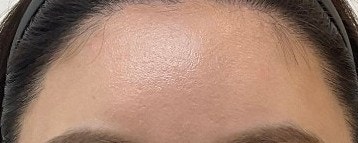
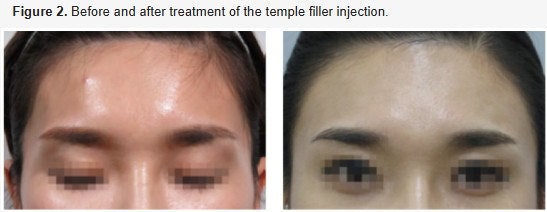
So, to create a natural forehead line,
🔹 Forehead Filler → Creates volume and curves
🔹 Temple Filler → Supplements side volume and connectivity
🔹 Forehead/Frown Line Botox → Smooths out unevenness during facial expressions
A design that considers these three together is crucial.
Division of roles: Temple Filler + Forehead Filler
▪ Forehead Filler
Creates volume in the center and upper part of the forehead
Responsible for the overall three-dimensionality and curve of the forehead
▪ Temple Filler
Naturally connects the sides of the forehead with the facial contour
Fills sunken temple areas to complete a smooth side profile
👉 Temple filler is
not about ‘creating massive volume’,
but rather plays a finishing role in refining the forehead line.
Why Forehead and Frown Line Botox are needed together
With forehead and temple fillers alone,
it is difficult to completely control
forehead wrinkles,
frowning between the eyebrows,
and unevenness caused by muscles
when making facial expressions.
When combined with forehead and frown line botox,
it reduces excessive muscle use,
helping the filler shape to be maintained naturally
and providing the effect of a smooth-looking forehead surface.
👉 In other words, botox can be seen as an auxiliary device that holds the shape of the filler.
Highly recommended for these individuals:
Those whose sides look sunken even after getting forehead filler
Those with an angular or masculine-looking forehead
Those who look tired due to sunken temples
Those who want a natural and smooth forehead curve
The most important points during the procedure
Designing the forehead, temples, and glabella together rather than viewing them separately
Prioritizing left-right balance and curved connections over excessive volume
Combining botox while considering the movement of facial expression muscles
Ultimately, for temple filler,
rather than ‘how much is injected’,
👉 how the balance of the entire forehead is adjusted determines the result.
Conclusion
Temple filler may seem like a procedure for a small area,
but it only produces natural results when combined with forehead filler and forehead/frown line botox.
If you want the entire forehead to have a smooth, connected curve without being excessive,
👉 it is important to approach temple filler not as a ‘standalone’ procedure, but as ‘part of the forehead design’.